How Middle East Tensions Impact Global Oil Markets in 2026
Middle East Tensions Impact Global Oil Markets, The Middle East has long been one of the world’s most critical energy-producing regions. It holds immense global importance as a primary supplier of crude oil to many nations. A significant portion of global crude oil exports from Saudi Arabia, Iraq, Qatar, Kuwait, the United Arab Emirates, and Iran. In 2026, the global market is facing severe challenges due to a long-drawn-out struggle in the Middle East which had a harmful impact on the global economy and how Middle East Tensions Impact Global Oil Markets. Countries like Pakistan rely heavily on crude oil imports. Consequently, fluctuations in oil supplies drive up prices across the board, placing a heavy burden on the general public. The ongoing conflict in the Middle East is disrupting global markets and creating significant difficulties for nations like Pakistan. Obstacles in oil production or transportation affect fuel prices and economic activities worldwide as major global affairs. Businesses ranging from large corporations to small enterprises are heavily dependent on fuel prices.
Table of Contents
Why the Middle East Tensions Impact Global Oil Markets?
The Middle East holds the world’s largest oil reserves. It comprises numerous countries that supply hundreds of thousands of barrels crude oil daily. Many international economies rely on this supply, making them vulnerable to various challenges. In 2026, political instability in the region has disrupted oil supplies and driven up the cost of available crude oil, significantly impacting the global market. Crude oil is traded in international markets. Political uncertainty in the Middle East can cause international oil prices to fluctuate within hours, creating adverse effects across the globe. Thats why Middle East tensions impact global oil markets.
The Importance of Global Shipping Routes
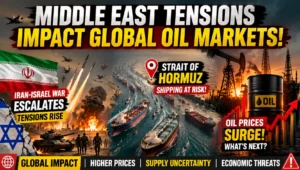
The security of international shipping lanes is very important because they have a significant impact on global oil prices. A large portion of international oil exports pass through key sea lanes such as the Strait of Hormuz, which is controlled by Iran. Ships from various countries pass through this route. However, due to the ongoing conflict, Iran has closed the Strait of Hormuz, which is causing oil prices to rise in the international market. Many countries are concerned about these repeated closures. This year, oil prices in countries like Pakistan have skyrocketed, pushing up the prices of all things. For a long time, many ships have been stuck in the Strait of Hormuz. No ship can pass through without Iran’s permission. Although major powers like the United States have repeatedly tried to engage in negotiations, Iran has not responded. Keeping the Strait of Hormuz open benefits every nation and helps maintain low petrol prices. Thats why Middle East tensions impact global oil markets.
Also Read: The Oil Market Absorbed the War Shock, but Buffers Are Running Low https://www.imf.org/en/blogs/articles/2026/07/15/the-oil-market-absorbed-the-war-shock-but-buffers-are-running-low
How Oil Prices React to Geopolitical Tensions?
Oil prices are driven up by supply and demand dynamics. When demand for oil increases, prices increase. In addition, prices in the international market increase when suppliers anticipate potential supply disruptions or disruptions in the future. Factors that cause price increases include:
- Disruptions in the supply chain.
- Increasing shipping costs.
- Transportation delays – which have become a common occurrence – are causing gasoline prices to rise.
- Suppliers are raising prices.
- Oil shortages.
It has been predicted that oil prices are likely to increase in the near future. This will increase the cost of everything, making it harder for the poor to earn a living.Thats why Middle East tensions impact global oil markets.
Impact on Global Economies
High oil prices impact economies worldwide and middle east tensions impact global oil markets. Countries that rely heavily on oil imports are well aware that rising petrol prices drive up the cost of everything domestically, severely affecting the economy and causing it to decline. Pakistan imports a vast amount of oil. consequently, prices for all commodities are high, causing significant distress among the population. Pakistan lacks sufficient domestic oil reserves to meet its own needs.
- Higher transportation costs
- Increase in inflation
- More expensive electricity generation
- Rising manufacturing costs
Businesses that rely heavily on transportation face major challenges. When prices rise, such increases cause significant disruptions to their operations, often leading to financial losses.
Effect on Consumers
Rising international oil prices lead to an increase in daily expenses for consumers, causing them significant hardship. The resulting effects include:
- Increases in petrol prices
- Increases in diesel prices
- Higher airline ticket costs
- Rising public transport expenses
- Higher prices for imported goods
A country like Pakistan, which relies heavily on oil, faces major challenges due to these price rised. Pakistan has encountered numerous difficulties related to petrol costs, and inflation has risen in other countries as well.
Renewable Energy Gains Attention
Due to high oil prices, people are increasingly interested in electric powered solutions. Everyone is buying electric vehicles and opting for solar charging facilities. Both government and private investors have begun investing in technologies for electricity generation. The government current objective is to promote the greater use of systems such as:
Solar power
Wind energy
Electric vehicles
Battery technology
Energy storage systems
The rise in petrol prices has led to a significant increase in the adoption of electric vehicles and products, as more people are shifting towards electric alternatives. Thats why Middle East tensions impact global oil markets.
Middle East Tensions Impact Global Oil Markets or Trade

International trade relies heavily on transportation networks.The better the network, the more stable prices remain. If oil prices rises then shipping costs increase, forcing companies to contend with escalating expenses.
Delays in shipping also cause significant losses for companies, which adversely affects global trade. High oil prices have negatively impacted global trade, causing substantial losses for both companies and investors. Thats why Middle East tensions impact global oil markets.Financial markets are also affected by oil prices.
The industries most significantly impacted include:
- Airlines
- Transportation
- Manufacturing
- Chemical production
- Tourism
At the same time, energy companies sometimes benefit from higher oil prices when production levels remain stable.
Also Read: Punjab Rescue 1122 Jobs 2026 https://globalnewshubz.com/rescue-1122-jobs-2026/
Final Words
The Middle East Tensions impact global oil markets is one of the world’s most important regions for energy supplies. Any political uncertainty or conflict impacts oil prices, transportation costs, and international markets because the energy plays vital role energy in every economy. Thats why Middle East tensions impact global oil markets.
Consequently, the conflict involving Iran has affected the entire world, leading to shifts in global markets.If this issue remains unresolved, oil prices will continue to rise. It is crucial that the Strait of Hormuz remains open to prevent delays or complications for shipments. Most ships pass through the Strait of Hormuz a narrow yet highly significant route on a daily basis. Currently, Iran has blocked this passage, halting the flow of shipments. Major powers like the United States are urging Iran to engage in negotiations but Iran remains unwilling to do so.
Why do Middle East tensions affect global oil prices?
Because the Middle East produces a large share of the world’s crude oil, any concerns about supply or transportation can influence international oil prices.
What is the Strait of Hormuz and why is it important?
The Strait of Hormuz is one of the world’s most important maritime routes for oil exports, connecting Gulf producers with international markets.
How do rising oil prices affect consumers?
Higher oil prices may increase transportation costs, fuel prices, airline fares, and the prices of goods that depend on shipping.
Which industries are most affected by higher oil prices?
Transportation, aviation, manufacturing, logistics, and chemical industries are among the sectors most influenced by changes in oil prices.
Why do investors closely monitor Middle East developments?
Investors monitor the region because geopolitical events can influence energy prices, financial markets, inflation, and global economic growth.