
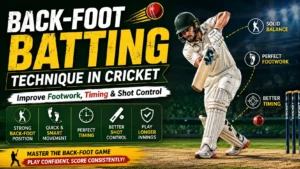

Back-foot batting is an important part of cricket batting technique, helping batters handle short-pitched deliveries and play effective back-foot shots. A strong back-foot technique begins with good batting fundamentals, including proper batting mechanics, a comfortable batting stance, and a balanced stance. Whether using a side-on stance or open stance, the batter should maintain a stable batting position.
Effective back-foot batting also depends on watching the ball, ball tracking, correct head position, body alignment, and quick foot movement. Controlled weight transfer and batting balance help produce clean cricket stroke play and better shot selection. These skills form the foundation of an orthodox batting technique and allow batters to play confidently from the back foot.
Table of Contents
Back-Foot Movement & Footwork
Effective back-foot movement starts when the batter quickly reads the length and decides whether to step back or step back and across. The back foot should move into a strong position, often with the back foot parallel to crease, while controlled movement towards stumps creates enough space to play the shot. Good footwork drills develop quick footwork, precise foot placement, and the confidence to move without losing balance.
As the batter moves back, keeping weight on back foot supports controlled weight transfer and creates a stable base. The front leg movement should remain natural, with the front leg drawn back when necessary and the heel raised to maintain flexibility and counterbalance. Most importantly, keep the head over the ball, head still, and eyes level, with the body in line with ball. This balanced body position allows the batter to stay composed and execute back-foot shots with better timing and control.
Visit this: Powerplay Batting Strategy in Cricket: Best Strategies, Shots & Tactics
Back-Foot Batting Shots — Key Points
- Back-foot drive: Move back decisively and drive through the line, especially against a well-directed delivery that gives enough room.
- Back-foot defence: Use a compact defensive stroke against a testing short-pitched delivery, keeping the bat close to the body and maintaining balance.
- Pull shot: A powerful attacking stroke played against a rising delivery or stump-high ball, using controlled rotation and strong wrist work.
- Cut shot: Play the cut when facing a wide delivery or ball outside off stump, directing the ball square or behind square.
- Hook shot: An aggressive option for short balls that rise toward the upper body, making it one of the key short-ball shots.
- Back-foot glance: Redirect the ball toward the leg side using timing and wrist control rather than excessive force.
- Square cut: A classic horizontal-bat shot used to punish width outside off stump.
- Counter-attacking shot: When the bowler drops short, a batter can turn a defensive situation into a counter-attacking shot by choosing an aggressive option.
- Horizontal-bat shots: Pulls, hooks, and cuts are common examples and require quick reactions to changing ball height.
- Straight-bat shots: A back-foot drive or controlled defence relies on a straighter bat path and precise alignment.

Back-Foot Drive Technique
The back-foot drive technique begins with a deep step back that creates enough space to play the ball confidently. Keep the back foot parallel to crease and maintain a stable base while preparing the bat with a high backlift. Good top-hand control guides the stroke, while a relaxed bottom-hand grip prevents the bat from closing too early. As the bowler delivers, maintain a diamond shape with arms, keep the leading elbow high, and allow the shoulders rotate vertically to generate controlled power.
As the ball approaches, the bat follows the line of the ball, with contact below eye level and ideally contact under eyes for better control. The batter should aim to strike forward of body while maintaining a smooth swing and controlled bat acceleration. Finish with a straight follow-through, keeping the head stable and body balanced. A balanced finish ensures the batter remains ready for the next delivery rather than falling away from the shot.
Pull, Cut & Hook Shots
| Shot | Technique & Execution | Best Situation | Key Focus |
|---|---|---|---|
| Pull Shot | The pull shot technique uses a controlled horizontal swing and cross-bat shot to hit the ball into the leg side. | Ideal to pull against short bowling, particularly during fast bowling and short-pitched bowling. | Focus on bat speed, timing, power hitting, and accurate shot placement for effective boundary hitting. |
| Cut Shot | The cut shot technique involves moving back and striking the ball square or behind square on the off side. | Best when the bowler offers width and allows you to cut wide deliveries. | Maintain balance and focus on timing, shot placement, and controlled bat speed rather than forcing the shot. |
| Hook Shot | The hook shot technique is a powerful cross-bat shot used to attack a ball rising toward the upper body. | Best when you can hook rising ball deliveries without losing control. | Requires quick reactions, precise timing, bat speed, and confidence in aggressive batting. |
| Counter-Attacking Stroke | A well-timed pull, cut, or hook can become a counter-attacking stroke when used to put pressure back on the bowler. | Useful against bowlers relying heavily on short-pitched deliveries. | Combine controlled aggression with smart shot placement and selective power hitting. |

Back-Foot Defence Technique
Back-foot defence is a key part of defensive batting, especially when facing short or fast deliveries. To protect the wicket, begin with a relaxed stance and move with a controlled step back and across when required. Keep the head over ball and eyes level while maintaining a high backlift. A dominant top hand, stable leading elbow, and straight bat help the batter defend straight balls with accuracy and control.
Use soft hands and a controlled bat to absorb the pace of the delivery and create soft contact. Keep ball contact under eyes and avoid forcing the shot, which helps avoid popping the ball up to nearby fielders. A disciplined defensive technique also means knowing when to leave wide deliveries outside the hitting zone. This approach allows the batter to stay composed, maintain balance, and reduce unnecessary dismissal risks.
Visit this also: How to Use Bouncer as a Bowling Tactic in Cricket
Back-Foot Batting Against Fast Bowlers
Playing back-foot batting against fast bowling requires quick decision-making and confidence. Before the ball is released, focus on reading the bowler, judging length, and tracking the ball trajectory. A short-length delivery, short ball, or bouncer can produce extra bounce, so the batter must stay alert to bounce variation and use available reaction time wisely. Good technique involves moving decisively onto the back foot rather than getting trapped on the crease.
Against pace bowling, playing late can give the batter more time to adjust and control the shot. Strong quick reactions are essential for handling short deliveries, particularly when the bowler changes pace or length unexpectedly. When attacking, use controlled aggression instead of swinging blindly. This approach makes attacking fast bowling safer and helps the batter respond effectively to changing conditions while maintaining balance and control.
Batting Grip & Bat Control
- Bat grip: Hold the handle comfortably without excessive tension, allowing the top hand and bottom hand to work together naturally.
- Top hand: The dominant top hand provides direction and stability, while the bottom-hand fingers should maintain a relaxed thumb grip.
- Bat control: Good bat control comes from keeping the bat face aligned with the intended shot and avoiding unnecessary wrist movement.
- Backlift: A controlled backlift, including a high backlift when appropriate, prepares the batter for a smooth bat swing and quicker response.
- Downswing: During the downswing, maintain a stable leading elbow and allow natural bat acceleration through the ball.
- Soft hands: Relaxed hands act like a shock absorber, helping reduce unwanted rebound and improving control against fast deliveries.
- Bat deceleration: After contact, controlled bat deceleration prevents excessive movement and keeps the stroke balanced.
- Follow-through: Finish with a controlled follow-through that keeps the bat path stable and leaves the batter ready for the next delivery.
Timing, Balance & Shot Execution
Good batting timing starts with strong hand-eye coordination, balance, and body control. Keep your weight distribution controlled and maintain a steady head position with your eyes on ball throughout the stroke. A stable base and controlled movement help create the ideal contact point, allowing the batter to use the right bat speed without losing balance.
Effective shot execution depends on precise contact, consistent stroke timing, and proper ball placement. Once contact is made, maintain a smooth follow-through to control shot direction and stay prepared for the next delivery. With practice, these fundamentals develop a natural batting rhythm, making back-foot strokes more controlled, accurate, and effective.

Back-Foot Batting Benefits
| Benefit | How It Helps |
|---|---|
| Better Short-Ball Response | Provides better response to short balls, extra reaction time, and improved ability in handling bounce. |
| Attacking & Defensive Skills | Supports attacking short bowling while maintaining strong defensive control. |
| Improved Technique | Develops improved footwork, better balance, and improved shot selection for more consistent batting. |
| More Scoring Options | Creates greater scoring options and encourages controlled stroke play against different lengths. |
| Pressure on Bowlers | Helps put pressure on bowlers and can encourage them to force fuller deliveries. |
| Confidence & Adaptability | Builds improved batting confidence and increases adaptability to pitch conditions. |
Common Back-Foot Batting Mistakes To Avoid
One of the most common problems in back-foot batting is poor footwork, particularly late movement or falling across the crease. When the batter does not move decisively, the head falling away, losing balance, and incorrect weight transfer can make clean contact difficult. A low backlift, excessive bottom-hand use, and hard hands can further reduce bat control and lead to a mistimed shot.
Batters should also avoid playing away from body, chasing wide balls, or making a poor shot selection against deliveries outside their scoring zone. An uncontrolled pull shot and mistimed cut shot can result in popping the ball up for an easy catch. Maintaining a stable head, controlled footwork, and proper body alignment helps reduce these mistakes and makes back-foot stroke play more consistent.
Frequently Asked Questions About Back-Foot Batting Technique
What is the back-foot batting technique in cricket?
The back-foot batting technique involves moving the back foot into position to play deliveries that are short, rising, or offer enough room for back-foot shots such as the pull, cut, and back-foot drive.
How do you improve back-foot batting technique?
Practice quick footwork, maintain a balanced stance, keep your head still and eyes on the ball, and work on weight transfer and bat control through regular batting drills.
Which shots are played from the back foot in cricket?
Common back-foot shots include the pull shot, cut shot, hook shot, back-foot drive, back-foot defence, and back-foot glance.
How should you play fast bowlers from the back foot?
Against fast bowlers, judge the length early, read the ball trajectory, move back decisively, keep your head over the ball, and use controlled aggression when attacking short deliveries.
What are the common mistakes in back-foot batting?
Common mistakes include poor footwork, late movement, losing balance, incorrect weight transfer, playing away from the body, chasing wide balls, using hard hands, and poor shot selection.


[…] Visit this: Back-Foot Batting Technique In Cricket: Improve Footwork, Timing & Shot Control […]
[…] Visit this also: Back-Foot Batting Technique In Cricket: Improve Footwork, Timing & Shot Control […]