
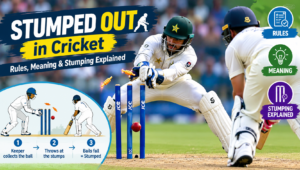

Stumped out in cricket is one of the most exciting wicket dismissals, especially when a batter steps outside the crease to play a shot and the wicket-keeper reacts quickly. In simple terms, stumped in cricket means the striker is out of their ground, is not attempting a run, and the wicket-keeper puts down the wicket without another fielder intervening. This stumped dismissal is covered under Law 39 of the Laws of Cricket.
So, what is Stumped out in cricket, and what does stumped mean in cricket? It is a specific method of dismissal where the stumped batsman or stumped batter loses their wicket because the wicket-keeper breaks the stumps while they are outside the crease. Stumping in cricket is closely related to a run out, but the key difference is that the striker must not be attempting a run. Under cricket Law 39, the delivery cannot be a no-ball, making these ICC stumping rules an important part of understanding this cricket dismissal and wicket dismissal.
Table of Contents
Rules & Conditions of Stumped out in cricket
The Stumped out in cricket rules are defined under Law 39.1 of the Laws of Cricket. For a batter to be out stumped, several conditions must be satisfied at the same time. The ball delivered must not be a no-ball, the striker must be out of their ground, and the batter must not be attempting a run when the wicket is fairly put down by the wicketkeeper.
Under the stumping law, the wicketkeeper must be responsible for putting down the wicket, with no fielder intervention. In other words, the wicketkeeper puts down the wicket while the batter is out of crease or outside the crease. The wicket may be broken directly by the wicketkeeper or, in certain circumstances, by the ball rebounding from the wicketkeeper’s person or equipment.
Key conditions for a stumping
- Legal delivery: The ball must be delivered and not a no-ball.
- Striker out of ground: The striker out of ground must be beyond the relevant crease when the wicket is put down.
- No run attempted: The batter must be not attempting a run or without attempting a run.
- Wicketkeeper intervention: The wicketkeeper must put down the wicket without another fielder’s involvement.
- Wicket fairly put down: The wicket must be fairly put down, meaning the required wicket-breaking conditions must be met.
- Run out conditions: If the specific requirements for stumping are not met, the incident may instead be considered under run out conditions, depending on the circumstances.
A useful point in Stumped out in cricket rules is that the batter does not necessarily have to miss the ball completely. What matters is whether the conditions of Law 39.1 are satisfied when the wicket is broken. Also, if the striker leaves the crease to avoid injury after receiving the delivery, the batter is not out stumped under the exception in Law 39.3.
In short: stumping rules require a legal delivery, a striker outside the crease, no attempt to run, and the wicketkeeper putting down the wicket without another fielder’s intervention. When all these conditions are fulfilled, the batter is out stumped under Law 39.1.

Wicketkeeper & Stumped out in cricket
The wicketkeeper plays the key role in a stumping dismissal. Standing as the wicketkeeper behind stumps, the keeper uses sharp wicketkeeper reaction, keeper reflexes, and strong wicketkeeping skills to collect the delivery and check whether the batter has left the crease. A keeper standing up is closer to the stumps, while a keeper standing back gives more distance against faster bowling. Good wicketkeeping technique and properly fitted wicketkeeper gloves help the keeper control the ball.
Once the keeper collects delivery, the wicketkeeper breaks stumps by using the ball to remove the bails. The wicketkeeper removes bails quickly before the batter can regain their ground. A quick wicketkeeper can turn a small movement by the batter into a wicketkeeper dismissal, making anticipation and speed essential. Whether the keeper catches ball cleanly or simply controls the delivery, the stumping must still meet the required conditions under the Laws of Cricket.
How Stumped out in cricket Happens
A Stumped out in cricket opportunity usually begins when the batsman steps out or the batter steps out of the crease and moves down the pitch or comes down the wicket to attempts a shot. If the batter misses the ball, the wicketkeeper collects the ball while the batter fails to return behind the crease. This creates a stumping chance for the keeper.
The keeper then makes a stumping attempt by quickly moving toward the stumps and removes the bails while the batter is still out of their ground. If the bails dislodged or stumps broken meet the required conditions, it becomes a successful stumping. A quick stumping or instant stumping depends on fast hands, quick reflexes, and sharp wicketkeeping, allowing the keeper to complete the dismissal before the batter can regain their crease.
Visit this: What Is a Cross-Seam Delivery? Complete Cricket Bowling Guide
Stumped out in cricket vs Run Out
The main difference between stumped and run out is whether the batter is attempting a run. In a stumped dismissal, the striker is outside the crease but not attempting a run. The wicketkeeper must put down the wicket, so wicketkeeper intervention is essential. In contrast, a run out dismissal can happen when a batter attempting run fails to make their ground while running between wickets or running between wickets to complete a run.
In a simple stumping and run out difference, stumping is specifically a striker dismissal involving the wicketkeeper, while a run out can involve fielder intervention and occurs under run out rules when the batter is attempting a run. If the batter is not attempting a run, the incident may qualify as stumped; if they are attempting a run, it is generally considered a run out. This helps explain whether a batter is stumped or run out and makes the dismissal comparison easier to understand.
Stumped out in cricket vs Bowled
The difference between stumped and bowled mainly depends on how the wicket is put down. In a bowled dismissal, the delivered ball itself hits stumps or hits the wicket and causes the bails to be removed by the ball. This can happen when the batter plays a missed shot or fails to make contact, resulting in the batter being bowled out. Here, the dismissal is directly caused by the ball passes striker and reaches the wicket.
In contrast, a stumping happens when the wicketkeeper catches ball after it passes the striker and then puts down the wicket while the batter is out of their ground. Therefore, stumped vs bowled can be remembered simply: a bowled dismissal is a dismissal by bowler, while stumping is a dismissal by wicketkeeper. The ball must directly break the wicket for a bowled dismissal, whereas the wicketkeeper is responsible for completing a stumping.
Stumped out in cricket vs Hit Wicket
The main difference between Stumped out in cricket and hit wicket is who causes the wicket to be broken. In a hit wicket dismissal, the batter causes the batter breaks own wicket by accidentally hitting the stumps or batsman dislodges bails with their body, bat, or equipment in circumstances covered by the Laws. It is therefore a form of self-dismissal, while the wicketkeeper is not responsible for breaking the wicket.
In Stumped out in cricket vs hit wicket, stumping is a wicketkeeper dismissal that occurs when the keeper puts down the wicket while the batter is out of their ground and not attempting a run. Both are different ways of getting out, but the key distinction is simple: in hit wicket, the batsman hits stumps themselves; in stumping, the wicketkeeper causes the wicket to be put down.

Ball, Bails & Breaking the Wicket
| Situation | How the wicket is put down | Relevance to stumping |
|---|---|---|
| Cricket ball in play | The delivery is in progress and the legal delivery can create a stumping opportunity. | The wicketkeeper must act before the batter regains their ground. |
| Ball hits stumps | If the ball breaks wicket directly and causes the bails dislodged, the wicket has been put down by the ball. | This is different from a normal stumping completed by the keeper. |
| Ball in wicketkeeper’s gloves | The keeper controls the cricket ball after collecting the delivery and can use it to put down the wicket. | A common way a stumping is completed. |
| Breaking wicket with ball | The keeper can use the ball to remove the bails while holding it. | This can result in a valid stumping when all conditions are satisfied. |
| Breaking wicket with hand | The hand holding ball can break the wicket, provided the ball is held in that hand. | The wicketkeeper can complete the dismissal without throwing the ball. |
| Arm holding ball | An arm holding ball may be used to put down the wicket when the ball remains properly held. | The wicket must still be fairly broken wicket under the Laws. |
| Ball rebounds from wicketkeeper | The ball rebounds from wicketkeeper and may subsequently put down the wicket in circumstances allowed by the Laws. | Such a rebound can still be relevant when determining whether the wicket put down fairly. |
| Bails removed | The bails are bails removed from the top of the stumps, completing the breaking of the wicket. | Required for a conventional wicket-breaking action unless the Laws allow another method. |
When Stumping Is Not Out
A stumping not out decision can occur when the required conditions for the dismissal are not met. For example, there is no-ball, the batter is attempting a run, or fielder intervention is involved. It is also not out stumped if the wicket is not fairly put down. If the batter makes ground before the wicket is broken, they are safe, especially when their bat grounded behind crease or foot grounded behind crease and part of the batter remains inside popping crease.
Another important exception is when the batter avoids injury by leaves ground to avoid injury after the delivery. In such a situation, the batter should not be given Stumped out in cricket under the relevant Law. Therefore, an invalid stumping does not automatically mean the batter is dismissed; the umpire checks whether every condition has been satisfied before declaring a safe batter out.

Stumping in T20 Cricket
T20 stumping is a common and exciting T20 cricket dismissal, particularly when aggressive batting and attacking batters create chances behind the stumps. In stumping in T20, a T20 wicketkeeper needs fast reactions because batters often move down the pitch against spin in T20 cricket. This can create a quick stumping opportunity, especially when spin bowling in T20 is used to challenge batters outside their crease.
During the powerplay, powerplay stumping opportunities can occur when batters take risks against slower bowlers, while the middle overs often provide more chances because teams regularly use spin. Effective T20 wicketkeeping therefore requires anticipation, quick hands, and excellent positioning. Stumping statistics can also help show how frequently wicketkeepers contribute to dismissals in this short format cricket, where even one quick wicket can change the momentum of a match.
Visit this also: Penalty Runs in Cricket: Rules, Types & 5-Run Penalties Explained
Cricket Scoring & Scorecard Terms
On a stumped scorecard, a stumping is normally shown using the “st” abbreviation followed by the wicketkeeper’s name and the bowler’s name. For example, “st Rizwan b Shaheen” means the batter was dismissed through wicketkeeper stumping, while the bowler is also credited with the wicket. This Stumped out in cricket notation helps readers quickly understand the dismissal record on a batting scorecard.
A scorecard dismissal also appears in the fall of wicket, showing when that batter was dismissed and the team score at the time. Unlike some other dismissals, a stumping involves both a wicketkeeper credited action and a bowler credited wicket. Therefore, the individual dismissal is recorded in the batting scorecard, while the bowler’s figures also include the bowler wicket, making the dismissal notation easy to identify during a match.
Frequently Asked Questions About Stumped out in cricket
What does stumped out mean in cricket?
Stumped out means the striker is outside the crease, is not attempting a run, and the wicketkeeper fairly puts down the wicket.
What are the rules for a stumping in cricket?
Under Law 39, the delivery must not be a no-ball, the striker must be out of their ground, and the wicketkeeper must put down the wicket without another fielder intervening.
What is the difference between Stumped out in cricket and run out in cricket?
A batter is usually stumped when they are outside the crease without attempting a run. A run out generally involves a batter attempting a run and failing to make their ground.
Can a batter be stumped off a no-ball?
No. A batter cannot be dismissed stumped from a no-ball, although other dismissal possibilities may apply depending on the circumstances.
Who gets credit for a stumping in cricket?
The wicketkeeper gets credit for completing the stumping, while the bowler is credited with the wicket in the bowling figures, provided the delivery is not a no-ball.


