
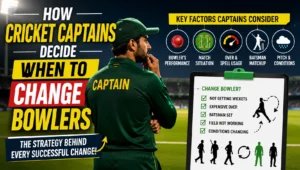

A cricket captain makes constant tactical decisions during a match, and bowling changes are one of the most important parts of cricket captainy. By reading the game and assessing the match situation, the captain decides when to change the bowling rotation, manage a bowling spell, or bring in experienced bowlers, strike bowlers, or part-time bowlers. These choices depend on game awareness, scoreboard pressure, run-rate control, and momentum control.
Effective bowling management combines match strategy, bowling plans, bowler selection, and over management. A captain may use an attacking strategy and aggressive field placement to target wickets, or choose a defensive strategy for partnership control and limiting runs. These in-game tactics, known as tactical bowling, help shape the cricket captain’s decision, bowling allocation, and overall wicket-taking strategy.
Table of Contents
Triggers for Changing Bowlers
Cricket Captain often make a bowling change when a clear partnership trigger or boundary trigger appears. Consecutive boundaries, an expensive over, rising run rate, and sudden scoring acceleration can signal that the current bowler is losing control. If batsman dominance becomes obvious or a partnership building situation develops, the cricket captain may look for a wicket opportunity by introducing a fresh bowler.
Other changes are based on a matchup trigger, phase trigger, or loss of bowling rhythm. An ineffective spell, reduced bowling pressure, or a batsman settling in can encourage a tactical switch. Cricket captains may respond by changing pace, changing angle, or using a different bowling variation to disrupt batting rhythm and create a chance of breaking a partnership.

Bowling Changes by Match Phase
- Powerplay bowling: During new-ball bowling, cricket captains usually rely on opening bowlers to exploit fielding restrictions, swing, and early movement. Limited-overs strategy often focuses on taking wickets while controlling the scoring rate.
- Middle overs: Middle-over spinners become important as cricket captains manage over allocation and use different bowling resources. Changes can be made to maintain pressure and prevent batters from settling.
- Death overs: In the death overs, cricket captains often use death-over specialists and a yorker specialist. Pace variation and accurate execution become crucial during the final overs when boundary scoring increases.
- Tactical phases: Effective innings management means preserving strike bowlers and saving overs for key moments. Captains adjust their plans throughout these tactical phases based on wickets, scoring rate, and match conditions.
Visit this: How Captains Set Fields in Test Cricket: Complete Guide to Field Placements & Strategies
Matchups, Batters & Bowling Styles
A captain studies the bowler-batter matchup before making a bowling change. The aim is to identify a batter’s batting weakness, understand their shot selection, and exploit a specific bowling weakness. For example, a left-handed batter and right-handed batter may respond differently to a left-arm angle or right-arm angle. Captains can choose a fast bowler, swing bowler, seam bowler, or spin bowler depending on the conditions and the batter at the crease.
Bowling style also changes according to batter intent. An attacking batter focused on boundary hitting may be challenged with pace variation, change of pace, or extra bounce, while a defensive batter who relies on strike rotation may face swing, seam movement, or spin variation. Within spin options, captains can use off-spin or leg-spin to create different angles and force mistakes.
Reading the Match & Momentum
- Match momentum: Captains monitor batting momentum and bowling momentum by studying the run-scoring pattern, scoring rate, and economy rate. A sudden batting surge may require an immediate bowling change.
- Pressure building: Regular dot balls create scoreboard pressure, while a high required run rate increases chasing pressure. Captains use these moments to strengthen run-rate control.
- Partnership momentum: A growing partnership can change the match situation and establish a strong game rhythm. A bowling change may help break that momentum before it becomes difficult to control.
- Tactical awareness: Through over-by-over analysis and ball-by-ball assessment, cricket captains track small changes in the game. Captain’s instinct and tactical awareness then help determine whether to maintain the current plan or make a bowling change.
Conditions & Bowler Performance
Captains closely monitor pitch conditions and weather conditions because they can quickly change bowling effectiveness. A dry pitch, worn pitch, or spin-friendly conditions may encourage a cricket captain to use a spinner, while seam-friendly conditions and swing conditions can favor a seamer. The dew factor, fading light, and whether the ball is a wet ball can also influence the decision.
The ball condition matters throughout an innings. The new ball can offer movement, while an old ball may require different tactics. Cricket captains also watch bowler fatigue, especially when a tired bowler begins showing reduced bowling confidence, negative body language, or loss of control. If the bowling length or line and length becomes inconsistent, changing the bowler can help restore pressure.

Field Placement After a Bowling Change
| Field Strategy | Typical Placement | Purpose |
|---|---|---|
| Attacking field | Close catchers, slip fielders, gully, short leg, leg slip | Creates wicket-taking chances while supporting the new bowler and using the bowler’s strengths. |
| Defensive field | Deep third, deep midwicket, and boundary riders | Focuses on protecting boundaries and limiting the batter’s scoring options. |
| Off-side control | Backward point, cover, mid-off | Controls common batter’s scoring areas and supports the fielding strategy. |
| On-side control | Mid-on, square leg, fine leg | Helps restrict shots into the leg side and maintain pressure. |
| Adaptive field setting | Combination of attacking and defensive positions | The cricket captain adjusts field placement according to the match situation, batter’s tendencies, and the new bowler’s strengths. |
Managing Bowling Resources
Captains must balance bowling workload, overs remaining, and each bowler’s bowling quota within their maximum overs. Careful bowling rotation and spell management help prevent overusing a strike bowler or frontline bowler. A fifth bowler, sixth bowler, or part-time bowler can provide a useful backup option when the main attack needs rest.
Good resource management also means maintaining enough bowling depth for different stages of the innings. Captains may focus on early spell management, saving overs for death, and planning end-of-innings bowling. Having a clear bowling order, knowing the likely next bowler, and keeping a contingency plan allows the cricket captain to respond quickly when the match situation changes.
Visit this also: How Teams Chase Targets in T20 Cricket: Complete Run Chase Strategy
Common Captaincy Mistakes
- Timing mistakes: Changing bowlers too early can prevent a bowler from building pressure, while changing bowlers too late can allow batters to dominate. Unnecessary bowling changes, removing a bowler too quickly, or overusing a bowler can also disrupt the team’s rhythm.
- Poor resource management: Burning the best bowler early may leave fewer options later, while saving the wrong bowler can weaken the crucial final overs.
- Ignoring match factors: Ignoring matchups, ignoring conditions, or ignoring batter intent can lead to ineffective decisions. Captains should avoid overly defensive captaincy and predictable bowling changes by adapting their plans to the evolving match situation.

Modern Cricket Captaincy & Analysis
Modern data-driven captaincy combines analytics, matchup data, performance statistics, bowling analytics, and batter statistics to support better decisions. Captains can use video analysis during pre-match planning and opposition analysis to understand scoring patterns, weaknesses, and effective bowling options. This information supports tactical planning and detailed over-by-over plans before the match begins.
During the game, analyst input and coach-captain communication can support real-time decision-making. However, captains still need strong captaincy skills, tactical intelligence, and a practical decision-making framework to react to unexpected situations. After the match, post-match analysis and a decision diary can help review bowling changes and improve future contingency planning.
Frequently Asked Questions About Cricket Captains
When should a cricket captain change a bowler?
A captain may change a bowler when the scoring rate increases, a partnership becomes dangerous, the bowler loses control, or a better matchup is available.
Why do captains change bowlers after consecutive boundaries?
Consecutive boundaries can indicate that a batter has settled in or gained momentum. Changing bowlers can disrupt the batter’s rhythm and create a new tactical challenge.
How do pitch conditions affect bowling changes in cricket?
Captains consider whether the pitch is dry, worn, seam-friendly, or helpful for spin. Weather, dew, and ball condition can also influence which bowler is most effective.
How do matchups influence a captain’s bowling changes?
Captains study the batter’s strengths and weaknesses and may select a bowler with a suitable angle, pace, swing, seam movement, or spin variation to create a favorable matchup.
How do captains manage bowlers during different phases of a match?
Captains typically manage bowling resources across the powerplay, middle overs, and death overs. They balance current pressure with overs remaining and may save key bowlers for crucial stages of the innings.
Conclusion
Effective captaincy is about more than simply choosing the best bowlers. A cricket captain must use game awareness, reading the game, and match strategy to make timely bowling changes. Through careful bowling rotation, bowling plans, and bowling management, the captain can respond to the changing match situation and build scoreboard pressure.
The right captain’s decision can strengthen partnership control and momentum control while creating opportunities for wickets. By combining tactical decisions, in-game tactics, and tactical bowling, captains can adapt their approach and give their team a better chance of controlling the match.


[…] Visit this also: How Cricket Captains Decide When to Change Bowlers […]
[…] Visit this also: How Cricket Captains Decide When to Change Bowlers […]