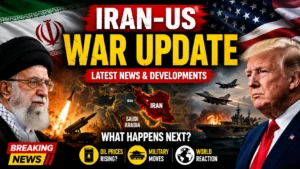
Iran-US War Update 2026,I almost didn’t notice gas had jumped again until I was standing at the pump watching the numbers climb faster than my patience. Four dollars a gallon, back where it was months ago. That’s usually my first sign something’s shifted in the Middle East before I even open a news app.This time it’s not a minor flare up. The US and Iran are back in an active shooting war, and if you’ve been half following the headlines and feel lost on what’s real versus what’s noise, that’s completely normal. This war has gone through ceasefires, collapses, and reversals so many times that even people who cover it for a living keep having to update their notes.
Here’s where things actually stand, how we got here, and what it means for regular life gas prices, travel, your news feed not just geopolitics.
As of July 20-21, 2026, the US has carried out ten straight nights of strikes on Iran, and Iran has been hitting back at US allies across the Gulf. A ceasefire that had held since April basically fell apart in early July.
Two US service members were killed in Jordan on July 17 defending against Iranian missile and drone attacks, with a third reported missing, according to US Central Command (CENTCOM). A tanker was hit by a projectile in the Strait of Hormuz on July 20, per the UK Maritime Trade Operations center, and Iranian strikes have reportedly targeted shipping and infrastructure across several Gulf states.
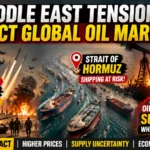
Gas is back near $4 a gallon nationally, and US crude oil jumped roughly 9% in a single day in mid July as the Strait of Hormuz one of the world’s most important oil shipping routes turned into a flashpoint again.
How We Got Here (The Short Version)
This didn’t start last week. The current war traces back to February 28, 2026, when the US and Israel launched a coordinated wave of strikes on Iranian military, nuclear, and leadership targets under the US codename Operation Epic Fury. That opening strike reportedly killed Iran’s Supreme Leader, according to Britannica’s timeline of the war, along with dozens of other officials.
Iran responded with a barrage of missiles and drones across the region, and what many analysts expected to be a short exchange turned into weeks of sustained fighting. A ceasefire took hold on April 8, and in June both sides worked out a memorandum of understanding meant to reopen the Strait of Hormuz and wind the conflict down.
That’s worth separating from an earlier, shorter conflict the June 2025 “12 Day War” between Israel and Iran, which damaged Iranian nuclear sites and preceded this larger war by about nine months. People mix the two up constantly, and it makes following the news genuinely confusing if you don’t know there were two separate rounds.
Why the Ceasefire Fell Apart
The June agreement didn’t hold. Iran reportedly tried to assert control over the Strait of Hormuz warning commercial ships to follow its own preferred routes and reportedly attempting to charge fees for passage. When Iran fired on multiple ships, including three commercial vessels on July 6-7, President Trump said he considered the truce over, and strikes resumed on both sides within days.
Since then it’s been a steady back-and-forth: US strikes on Iranian targets, Iranian retaliation against US bases and Gulf allies, and repeated warnings from Tehran that interference in the strait is a “red line,” according to Iranian state media. A senior Iran project analyst at the International Crisis Group described the risk of both sides sliding into what he called a “forever war” once the ceasefire talks collapsed.
What This Actually Means for You
You don’t have to be a foreign policy person for this to affect your week.
Gas and oil prices: Every time Strait of Hormuz shipping gets disrupted, oil prices react almost immediately, because a huge share of the world’s oil moves through that one narrow waterway. Prices are still well below the war’s earlier peak of over $110 a barrel, but they’ve been climbing again since the ceasefire broke.
Travel: The State Department issued a worldwide caution urging Americans, especially those in or near the Middle East, to stay alert. If you have travel booked to the region, this is the moment to actually read the advisory instead of skimming it.
Markets: Airlines, shipping, and energy stocks tend to swing on every escalation or de-escalation headline. If you check your 401k or a stock app and see unusual movement in energy or travel sectors, this war is very likely why.
How I Actually Follow Iran-US War Update 2026 Without Losing My Mind
I used to just doomscroll whatever showed up in my feed, and it made me anxious without making me informed. Here’s what’s actually worked better:
Pick two or three primary sources and stick to them. I use CENTCOM’s official statements for military claims, plus a wire service live blog (AP or Reuters) that updates through the day.
Check maritime incidents through UKMTO if you want to know what’s actually happening in the Strait of Hormuz, rather than relying on secondhand clips.
Cross-check anything dramatic before sharing it. Both sides put out claims that don’t hold up CNN has reported on unverified claims from Iranian state media that couldn’t be independently confirmed, and the Pentagon itself has faced questions over how quickly it disclosed troop injuries.
Use flight-tracking apps like Flightradar24 if you’re curious whether specific airspace is closed it’s a faster, calmer way to check than searching for panic posts.
Set a check-in time, not a constant refresh. Once or twice a day is enough to stay current without it eating your whole day.
Mistakes People Keep Making With This War News
Confusing this war with the 2025 “12 Day War.” They’re related but separate events, and mixing up the timelines leads to wrong conclusions about how long this has actually been going on.
Treating casualty numbers as settled fact. Groups like Iran Human Rights and Iran’s own health ministry have put out different figures, and outside fact-checkers openly describe casualty and target details as contested and still shifting.
Panicking over every price swing. Gas and oil prices are reactive and volatile right now. A one-day spike doesn’t necessarily mean a long-term trend, though sustained Strait of Hormuz disruption could change that.
Assuming one news alert tells the whole story. This war has reversed course ceasefire, collapse, ceasefire, collapse multiple times already. Whatever’s true this week might shift by next week.
The Political Fight Back Home
This war has also become a genuine fight inside US politics, not just overseas. In June, the Senate passed a war powers resolution 50-48, with four Republicans joining Democrats, directing the president to remove US forces from the conflict. The House had passed a similar measure earlier. Neither vote was legally binding, and the administration has continued military action since, notifying Congress under the War Powers Act that strikes resumed on July 7.
Supporters of the resolution argue Congress, not the president, has the constitutional authority to commit the country to war. The administration has argued its actions are limited, defensive in nature, and aimed at preventing Iran from developing nuclear weapons. Both of those positions show up constantly in coverage, and it’s worth reading past the headline to see which one a given source is emphasizing.
The Human Cost (Because Numbers Aren’t Just Numbers)
It’s easy to talk about strikes and oil prices and lose sight of what this actually is. Independent monitors have reported hundreds of deaths and thousands of injuries since the war began, on top of American service members killed in action. Rights groups have also reported a sharp rise in executions inside Iran amid a crackdown tied to the unrest around the war. Foreign nationals across the region were evacuated when the fighting first broke out, and commercial shipping crews have been killed in tanker attacks in the strait.
If following this news has been heavy for you, that’s a completely reasonable reaction, and it’s okay to step away from it for a while the war will still be there when you check back in.
Final Thoughts
The Iran-US situation remains one of the most closely watched geopolitical developments in the world.At the moment, tensions are serious, but diplomacy and international pressure continue to play important roles.From my own experience following global events, one thing stands out every time: the first headlines are rarely the full story.The smartest approach is to stay informed, avoid panic, and rely on credible sources rather than sensational rumors.
International conflicts can evolve quickly, and developments may change within hours or days. For readers, the best strategy is simple follow verified updates, understand the broader context, and remember that headlines often tell only part of the story.
Is this the same war as the 2025 Israel-Iran conflict?
No, The 2025 “12 Day War” between Israel and Iran was a shorter conflict that ended in June 2025. The current war started separately on February 28, 2026, and has been far larger in scale.
Is there a ceasefire right now?
Not as of late July 2026. A ceasefire held from April through early July before collapsing over disputes about control of the Strait of Hormuz.
Why do gas prices keep moving because of this?
A large share of the world’s oil passes through the Strait of Hormuz. When shipping there is threatened or disrupted, oil prices react almost immediately, and that flows through to gas prices within days.
Where can I get reliable updates without the noise?
Official sources like CENTCOM press releases, State Department travel advisories, UKMTO for maritime incidents, and wire services like AP and Reuters tend to be more careful about labeling unverified claims than social media clips.
Should I be worried if I have travel planned to the region?
Check the State Department’s current advisory for your specific destination before making any decisions — conditions are changing quickly enough that a general answer here wouldn’t be reliable.
Bilal Ahmad
Bilal Ahmad is the Founder and Editor of GlobalNewsHubz. He writes about technology, world news, government schemes, and digital trends. His goal is to provide readers with accurate, well-researched, and easy-to-understand information using trusted and official sources.