Donald Trump’s Foreign Policy in 2026, Three weeks ago I reordered a webcam for a review I was doing. Same brand, same seller, same listing I’d bought back in March. The price had jumped by twelve dollars. Nothing about the product changed. What changed was a tariff rate, set somewhere in Washington, that quietly showed up in my cart total at checkout.That’s the moment it stopped being “news” for me and started being personal.I run a blog. I don’t work in government, I’m not a policy wonk, and I’m not going to pretend I have some insider line to the White House. What I do have is over a year of checking the news obsessively because my readers keep asking about it, and a growing pile of screenshots where I got the story wrong the first time and had to go back and fix it.
So this isn’t a textbook explainer. It’s what following Trump’s foreign policy in real time has actually looked like the parts that made sense, the parts that blindsided me, and the habits I’ve built to keep from getting fooled by a headline that turned out to be half the story.
Table of Contents
The one-line version, if you’re just catching up
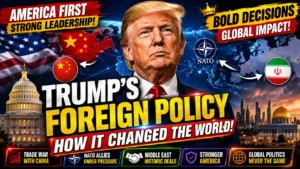
The whole approach gets branded “America First,” and stripped of the slogan, it basically means: fewer long-term commitments to international groups and treaties, tariffs used as a negotiating weapon rather than just a trade tool, and a president who prefers direct, personal deal-making over the usual State Department process. Whether that’s smart or reckless depends entirely on who you ask, and I’ll get to both sides later.
What matters more for this post is what it’s actually produced, because some of it has landed a lot closer to home than I expected.
Venezuela: the one that caught almost everyone off guard
In early January, US forces carried out a nighttime operation in Caracas and captured Venezuelan President Nicolás Maduro and his wife, flying them to New York to face charges. Trump said the US would “run” Venezuela until a transition happened. Caribbean airspace was shut down for a stretch afterward, which meant real flight delays and cancellations for anyone traveling through that region I had a reader message me asking why their connecting flight through Puerto Rico got scrapped that same weekend, and that’s how directly this stuff can hit an ordinary trip.
Iran: a ceasefire that didn’t hold
Strikes on Iranian nuclear sites happened in February. A memorandum was reached with Iran in June that was supposed to calm things down. By July, fighting had picked back up again, this time centered on control of the Strait of Hormuz a chokepoint that matters to literally anyone who fills up a gas tank, since a huge share of the world’s oil shipments pass through it.
Ukraine and Russia: “95% done” for a very long time
Back in December, Trump described a Ukraine peace deal as close to 95% finished. Months of talks later, as of this writing, there’s still no signed deal. Both sides blame each other for the holdup, Trump has at times blamed Ukraine specifically, and the fighting has continued through all of it. If you’ve seen headlines saying peace is “close” every few weeks since early this year, you’re not imagining it that phrase has come up a lot without a final signature to match it.
Gaza: a real ceasefire, a rocky second half
This one’s genuinely more concrete than the others. A 20-point peace plan led to an actual ceasefire between Israel and Hamas starting in October last year, hostage exchanges happened, and a “Board of Peace” was set up in January to oversee what comes next. But the harder part disarming Hamas, setting up a stable government, actual reconstruction is still very much a work in progress, and Israeli officials have repeatedly said the deal only holds if certain security conditions are met.
Tariffs: the one that shows up in your shopping cart
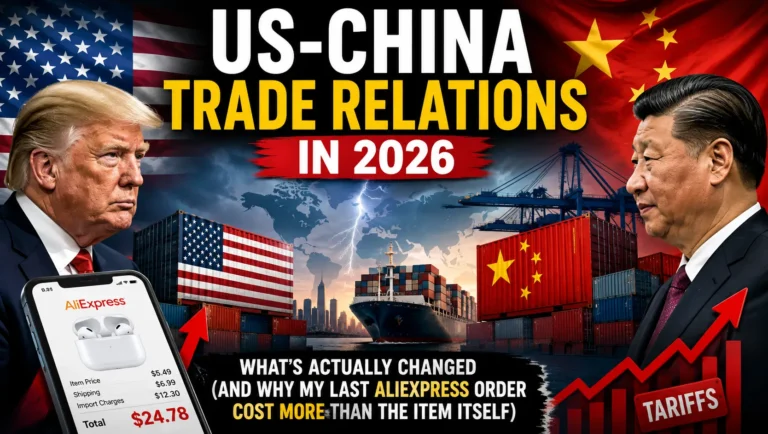
This is the part I’ve felt directly. Trump’s sweeping global tariffs, imposed under emergency powers, got struck down by the Supreme Court in a 6-3 ruling in February. Within hours, the administration pivoted to a different legal authority Section 122 of an older trade law and imposed a new 10% (later 15%) tariff on imports from almost everywhere. That law caps things at 150 days unless Congress extends it, and that clock runs out on July 24 literally the day after I’m writing this. Nobody I’ve read expects Congress to step in, so importers, small businesses, and anyone buying imported gadgets (hi, that’s me) are watching this deadline closely.
NATO: paying more, doing less together?
The administration points to a win here: NATO allies agreed to a 5% defense spending target, which is genuinely a bigger commitment than allies have made in years. At the same time, the US announced plans this summer to pull back some of its own military assets from Europe fewer fighter jets, refueling planes, and surveillance aircraft stationed there. So allies are being asked to spend more while the US quietly does less alongside them, which is a strange combination if you sit with it for a minute.
How I actually keep track of this without losing my mind
I used to just scroll headlines and hope I understood the gist. That backfired more than once. Here’s what actually works for me now.
1. Pick two or three primary sources, not ten aggregators. I check Reuters and AP directly instead of relying on whatever summary shows up in my feed. Aggregator apps tend to compress a nuanced story into a misleading one-liner.
2. Separate “announced” from “in effect.” A lot of these headlines are about something Trump said, posted, or signed not necessarily something that’s actually happened on the ground yet. The tariff story above is a perfect example: announced, struck down, replaced, and now set to expire, all within about five months.
3. Always check the date before you share something. I’ve been burned by reposting something that turned out to be from a different point in the year and no longer accurate. Now I make it a rule to look at the byline date before I trust anything, especially on a fast-moving story like Ukraine or Iran.
4. Use a tracker instead of trying to remember everything. Ballotpedia keeps a running list of Trump’s executive orders, and the Council on Foreign Relations publishes regular foreign policy trackers. I keep both bookmarked instead of trying to hold the timeline in my head.
5. Watch the money side, not just the politics side. Sites like the Yale Budget Lab track actual effective tariff rates, which tells you a lot more about real-world impact than a press conference does. If you import anything for resale or personal use, this is worth five minutes a month.
Mistakes I’ve made covering Donald Trump’s Foreign Policy in 2026
I assumed the first round of tariffs was permanent and told readers to plan around it then the Supreme Court struck it down within days. I called the Gaza ceasefire “the end of the war” in an early draft, which was premature given how shaky phase two turned out to be. And I took a single social media post about a Ukraine deal being finalized at face value once, only to see it walked back within 48 hours. None of these were huge disasters, but they taught me to add “as of this writing” to basically everything now, and I’d genuinely recommend that habit to anyone writing or talking about this stuff.
The two ways people read all of this
Supporters point to a real list of wins: a Gaza ceasefire that didn’t exist before, a NATO spending increase allies had resisted for years, the capture of a wanted authoritarian leader, and a White House that describes itself as having ended eight separate conflicts.
Critics point to a different list: a Supreme Court slapping down the administration’s own tariff authority, a Ukraine war that’s dragged on despite repeated promises it was nearly solved, conflicts like Iran flaring back up months after being declared handled, and rising prices and travel disruptions that ordinary households are the ones absorbing.
Both lists are describing the same year. Which one feels more true probably depends on where you’re standing, and I’d rather hand you both than pretend there’s one obvious verdict.
If you import anything parts, gadgets, inventory for a small shop the tariff situation is the thing to watch most closely, because it changes your actual costs, not just the news cycle. If you travel through the Caribbean, Middle East, or Eastern Europe, keep an eye on airspace advisories before you book anything tight on connections. And if you’re just trying to make sense of the bigger picture, resist the urge to treat any single week’s headline as the final word this entire year has been a lesson in how much can change between one Tuesday and the next.Donald Trump’s foreign policy in 2026 is very stressful.
Final thoughts
I didn’t expect a webcam order to teach me anything about foreign policy, but that’s kind of the point of all this the big global stuff and the small everyday stuff aren’t as separate as they look. I’m going to keep tracking it the same way I have been a couple of trusted sources, a healthy dose of “let’s see if this actually happens,” and a running list of the times I got ahead of myself. If you’re trying to follow this too, you don’t need to become a foreign policy expert. You just need to slow down half a step before you believe the headline.Donald Trump’s foreign policy in 2026 is very stressful.
Is Trump’s tariff policy still in effect right now?
Part of it. The original sweeping tariffs were struck down by the Supreme Court in February 2026. A replacement 10-15% tariff under a different law (Section 122) took its place, and that one is set to expire on July 24, 2026, unless Congress extends it, which looks unlikely as of this writing.
Did the US actually go to war with Iran?
There were US strikes on Iranian nuclear sites in February 2026, a ceasefire-style agreement in June, and renewed fighting by July centered on the Strait of Hormuz. It’s been an on-and-off situation rather than one clean event.
Is the Israel-Hamas war over?
A ceasefire has held since October 2025 with a formal peace framework in place, but the harder parts — disarmament and long-term governance of Gaza — are still being worked out, and officials on multiple sides have flagged real risks of it unraveling.
Has Trump ended the Ukraine war?
No, Despite repeated statements that a deal was close, there’s no signed peace agreement as of this writing, and fighting has continued.
Why did the US capture Venezuela’s president?
In January 2026, US forces captured Nicolás Maduro in a military operation in Caracas, and he was flown to New York to face narco-terrorism charges. The administration said it would help oversee a transition of power in Venezuela afterward.
Bilal Ahmad
Bilal Ahmad is the Founder and Editor of GlobalNewsHubz. He writes about technology, world news, government schemes, and digital trends. His goal is to provide readers with accurate, well-researched, and easy-to-understand information using trusted and official sources.