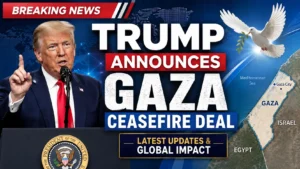
Trump Announces Gaza Ceasefire Deal, my phone would not stop buzzing Thursday night. First it was a news alert, then three group chats, then a cousin texting “Did you see this?” with zero context, like I’m supposed to just know. That’s basically how every big Gaza headline lands these days fast, dramatic, and confusing if you haven’t been following along closely.
So I did what I always do when a story like this blows up. I closed the group chats, opened five different news apps, and spent an hour cross checking what was actually said versus what the headlines made it sound like. That gap between the headline and the actual text of the announcement is where most people get the story wrong. Here’s what I found, laid out the way I wish someone had laid it out for me.
Quick recap: this isn’t the first Gaza ceasefire announcement
If you feel like you’ve heard “Gaza ceasefire” before, you have. Back in October 2025, Trump unveiled a 20 point plan that led to a US brokered ceasefire between Israel and Hamas. That first deal did real things hostages held since the October 7, 2023 attack were released, Palestinian prisoners were freed, and the fighting scaled back. It also set up a body called the Board of Peace, chaired by Trump, meant to oversee Gaza’s transition and eventual reconstruction.
But that first phase never fully wrapped up. The two sticking points that stalled everything for the better part of a year were Hamas disarming and Israel actually withdrawing its forces. Everyone agreed those things needed to happen “eventually” nobody agreed on the order, the timeline, or who moves first.
So what changed this week
Late Thursday, July 30, Trump posted on Truth Social that the Board of Peace had reached what he called a historic agreement for Hamas and other armed groups in Gaza to fully disarm. Mediators from Egypt, Qatar, Turkey, and the US reportedly spent months hammering out the details of this next phase.
By Friday, Hamas confirmed it had agreed too with a big asterisk. A member of Hamas’s negotiating team put it bluntly, they’re not touching disarmament until Israel actually withdraws first. Hamas also said its heavier weapons the stuff that would come later in the process won’t be handed over unless there’s real movement toward a Palestinian state, which Israel’s current government has flatly rejected.
Meanwhile, Israel hasn’t officially signed off on any of this. Prime Minister Netanyahu hadn’t publicly weighed in as of Friday, and at least one Israeli minister, Orit Strouk, came out strongly against the deal. Trump told reporters at a Cabinet meeting that Israel is “very happy” about it and that he has “an understanding” with them, but even he admitted the process will have “ups and downs” before anything’s locked in.
That’s not me being cynical about it that’s literally what the guy who announced the deal said about his own deal.
Why this is genuinely different from just another headline
I’ll admit, my first instinct was “another announcement, another maybe.” But a few details make this round feel more concrete than past ones:
Hamas has reportedly already dissolved its Gaza governing authority and started handing power to a new technocratic body, the National Committee for the Administration of Gaza.
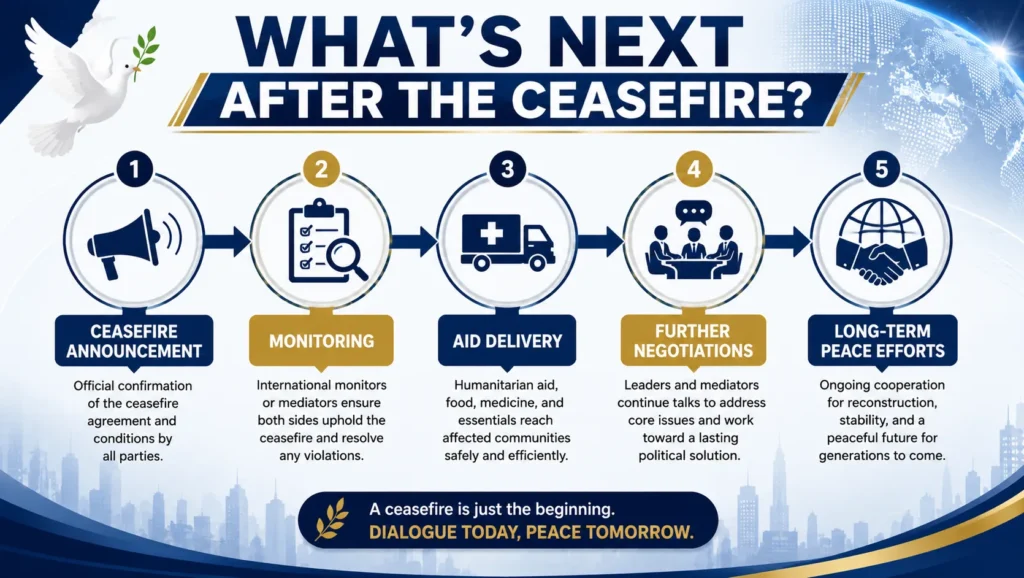
There’s an actual weapons handover process on paper. Hamas run police weapons go to the new committee first, then heavier weapons, tunnels, and production sites get decommissioned in stages as an international force deploys.
There’s a real, near-term deadline. Trump’s envoy to the Board of Peace, Nickolay Mladenov, said the team has about two weeks to present an implementation timetable both sides actually accept.
So this isn’t nothing. It’s just also not “the war is over,” no matter how the alerts on your phone framed it.
How I’m actually following this story without losing the plot
If you want to track this without drowning in contradictory headlines, here’s the process I’ve landed on:
Ignore the headline verb, read the actual quote. “Announces deal” and “deal takes effect” are two completely different things. This week’s news is squarely the first kind.
Check if both sides confirmed it not just one. Trump announcing something and Israel confirming something are not the same event. As of this week, only the US side and Hamas had spoken; Israel hadn’t formally signed on.
Learn the four or five recurring terms once, so you’re not re-Googling them every time:
Board of Peace – the Trump chaired international body overseeing Gaza’s transition.
International Stabilization Force – the outside force meant to help secure Gaza as Israel withdraws.
Yellow Line – the line Israeli troops pulled back to under the original October 2025 ceasefire.
National Committee for the Administration of Gaza – the new technocratic authority Hamas is handing power to.
Watch the actual deadlines, not the applause lines. The 14-day window for an implementation timetable is a far better thing to bookmark than any “historic” adjective in a press release.
Follow at least one wire service directly. I check the AP and Reuters feeds and skim Al Jazeera for the regional angle, rather than relying only on whatever clip shows up on social media. A basic Google News alert for “Gaza ceasefire” or “Board of Peace” will also flag updates as they land, faster than waiting for a push notification from a single app.
Mistakes I see people making with this story (I’ve made a couple myself)
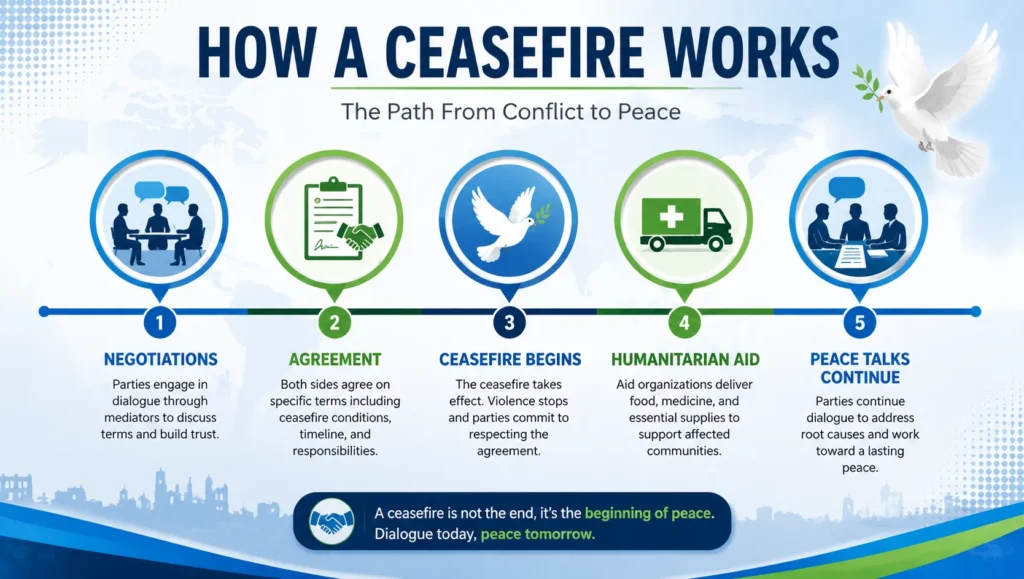
Mistake 1: Assuming “ceasefire” means the fighting stopped completely. It hasn’t. Even under the October 2025 truce, strikes continued and both sides have accused each other of violations. A ceasefire announcement is a political milestone, not a light switch.
Mistake 2: Treating this as a brand new war ending deal instead of phase two of an existing one. I did this myself the first time I skimmed the alerts I assumed this was a fresh ceasefire from scratch. It’s actually the long delayed follow through on commitments made back in October.
Mistake 3: Taking “who goes first” as a minor detail. It’s the entire deal. Hamas says disarm after withdrawal, and Israel’s government hasn’t committed to a withdrawal timeline. Until that sequencing gets resolved, everything else is paperwork.
Mistake 4: Ignoring the humanitarian numbers because the diplomacy is more “newsworthy.” Gaza’s Health Ministry puts the Palestinian death toll from Israel’s offensive at over 73,000, including people killed since the original truce technically began. Displacement, food shortages, and destroyed housing are still the daily reality for most people in Gaza, deal or no deal. That context matters if you’re trying to understand why reactions on the ground have been cautious rather than celebratory.
Why this matters even if you’re nowhere near the region
I get why someone scrolling past this might think “not my problem.” But a couple of practical ripple effects are worth knowing about:
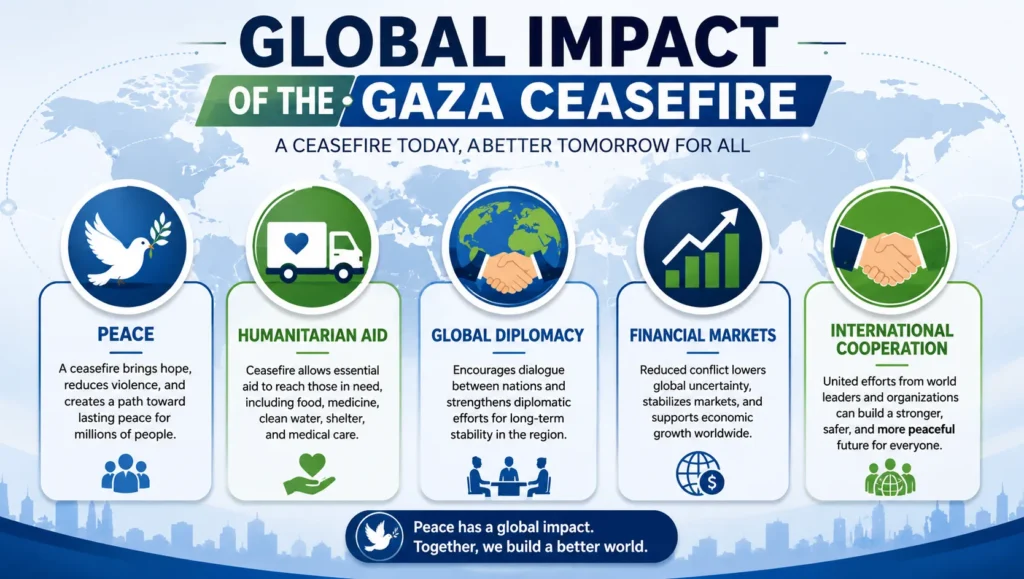
Markets react to this stuff. Oil prices and regional airline routes both tend to move on Gaza and broader Middle East ceasefire news, especially with the wider tension involving Iran still simmering in the background this year.
It’s a live political story in the US too. Trump’s team is treating this as a signature foreign policy win heading into a busy political year, so expect it to come up constantly in US news coverage regardless of whether you follow Middle East politics closely.
Humanitarian aid access is directly tied to these announcements. Whether more food, medicine, and reconstruction material gets into Gaza depends heavily on whether this disarmament and withdrawal sequence actually moves forward.
Where things stand Trump Announces Gaza Ceasefire Deal
Nobody involved in this not Trump, not Hamas, not the mediators is claiming this is finished business. It’s a real step, sequenced with real deadlines, built on top of a ceasefire that’s technically been in place since October but never fully held. Whether it turns into an actual end to the war depends on things that haven’t happened yet: Israel formally signing on, a withdrawal timeline both sides accept, and an implementation plan that survives contact with reality in the next couple of weeks.
I’ll be watching that 14-day window as closely as I watched the announcement itself. That’s usually where these stories actually get decided quietly, in the follow through, long after the headline stops trending.
Is the war in Gaza officially over now?
No, this is an agreement on a specific next phase Hamas disarming and Israel withdrawing not a final peace treaty, and Israel hadn’t publicly confirmed the terms as of this writing.
Has Israel agreed to this deal?
Not officially, Trump and Hamas have both spoken publicly about the agreement, but Israeli Prime Minister Netanyahu hadn’t formally confirmed it, and at least one sitting Israeli minister publicly rejected it.
What is the “Board of Peace”?
It’s an international oversight body, chaired by Trump, created as part of the original October 2025 ceasefire plan to help manage Gaza’s transition, reconstruction, and eventual governance.
Why won’t Hamas disarm right away?
Hamas says it won’t begin disarming until Israel withdraws its forces first, and has tied giving up its heavier weapons to progress toward Palestinian statehood something Israel’s government currently rejects.
Where’s the best place to follow updates on this?
Wire services like the AP and Reuters tend to update fastest and stick closest to verified facts, and Al Jazeera and The National offer solid regional context. A Google News alert for “Gaza ceasefire” is an easy way to get updates without constantly checking manually.
Bilal Ahmad
Bilal Ahmad is the Founder and Editor of GlobalNewsHubz. He writes about technology, world news, government schemes, and digital trends. His goal is to provide readers with accurate, well-researched, and easy-to-understand information using trusted and official sources.