Pakistan-Iran Trade Talks, Last month my cousin in Quetta sent me a voice note that made me stop scrolling. He runs a small shop that sells dry fruits, and he’d just picked up a fresh batch of Iranian dates and pistachios through a contact near Taftan. “Bhai, this time the rate was decent,” he said, “but the payment took three extra days because of the bank.”That one voice note honestly explained more about Pakistan-Iran trade than half the news reports I’d read that week.
I’ve been tracking this story for a while now, partly because it keeps showing up in the news cycle, and partly because I’ve got a small personal stake in it. I occasionally help my cousin list a few items online, and every time a “Pak-Iran trade talks” headline pops up, our margins actually shift a little. So I started digging past the press releases, and here’s what I actually found.
If you’ve noticed “Pakistan-Iran trade” trending more than usual this year, you’re not imagining it. In the first week of August 2026, a high level Iranian trade delegation is expected in Islamabad for what local reporters are calling “decisive talks” on expanding bilateral trade.
This didn’t come out of nowhere. Iran’s Trade Promotion Organization and Pakistan’s ambassador in Tehran have been meeting regularly through the summer. Back in June, Iranian President Masoud Pezeshkian made a state visit to Islamabad his first trip outside Iran since the war with Israel and the US started earlier in the year. Prime Minister Shehbaz Sharif’s government has been trying hard to turn that diplomatic warmth into real, measurable trade.
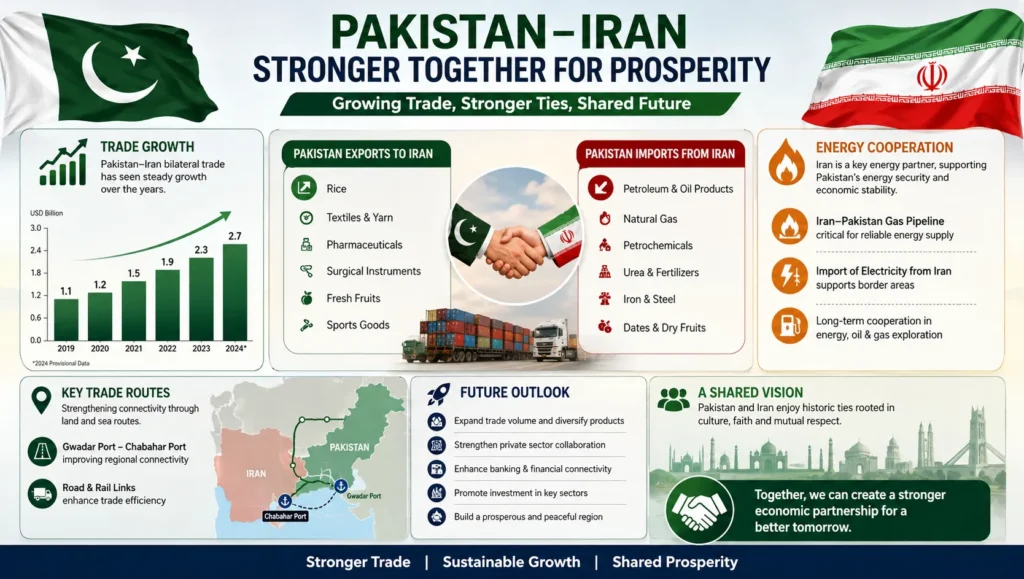
And the numbers everyone keeps repeating are these: bilateral trade currently sits around $2.8 billion a year. Both sides say they want to push that toward $10 billion within the next three to five years. That’s not a small jump. It’s more than triple where things stand today.
Why It’s Been So Hard To Get There?
Here’s the part most headlines skip over. Pakistan and Iran share a 900-kilometer border, decades of cultural ties, and genuinely complementary economies. Iran has cheap energy. Pakistan badly needs energy. On paper, this should be one of the easiest trade relationships in the region to grow.
In practice, it’s been a mess for years, mostly because of sanctions on Iran. Pakistani banks are extremely cautious about processing anything connected to Iran, since they don’t want to risk their access to the international dollar based system. That “three extra days” my cousin ran into isn’t really about slow paperwork it’s banks quietly double and triple checking transactions so nothing gets flagged.
Then early 2026 made things worse before it started making them better. The war between Iran and Israel, with US involvement, disrupted shipping through the Strait of Hormuz, and Pakistan actually opened up an overland transit corridor through its own territory to help move stranded cargo into Iran. Pakistan also hosted ceasefire negotiations in Islamabad that April, positioning itself as a mediator. That role seems to be part of why Tehran has been so warm toward Islamabad since, and it’s spilling into the trade conversation now too.
The Barter Trade Thing Nobody Explains Simply
This confused me for weeks, so let me save you the trouble.
Because of the banking restrictions, a lot of Pakistan-Iran trade doesn’t move the normal way, through dollars and standard letters of credit. Instead, both countries lean on a barter style mechanism goods exchanged for goods, or trade settled through approved local currency arrangements, rather than routing everything through a dollar system that sanctions make risky to touch.
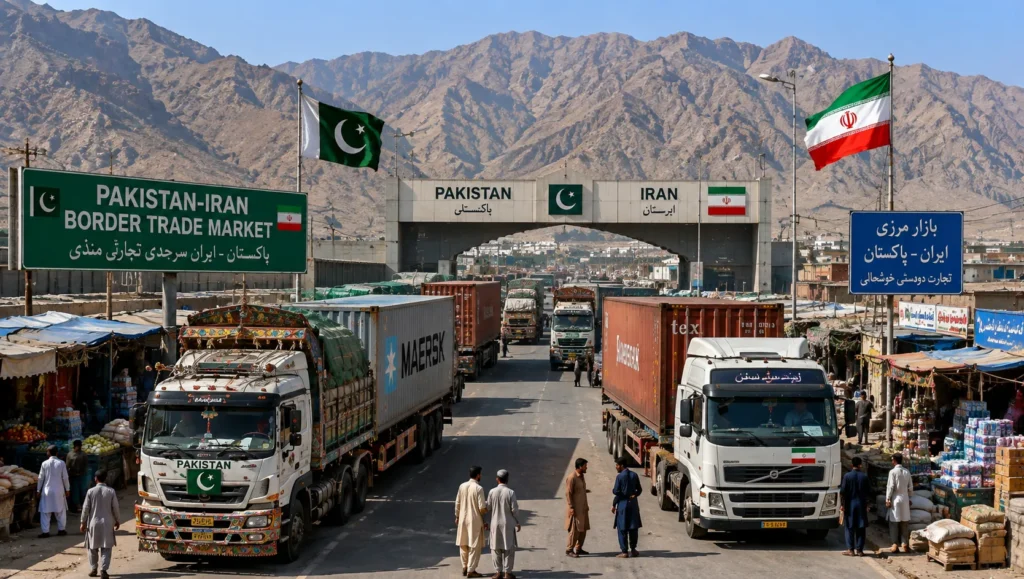
It sounds informal, but it’s an actual government backed setup. Pakistan has designated specific formal crossing points for this kind of trade at concessional customs rates: Taftan-Mirjaveh, Ladgasht-Jalaq, Parome-Kuhak, Mand-Pishin, and Santsar-Nobandan.
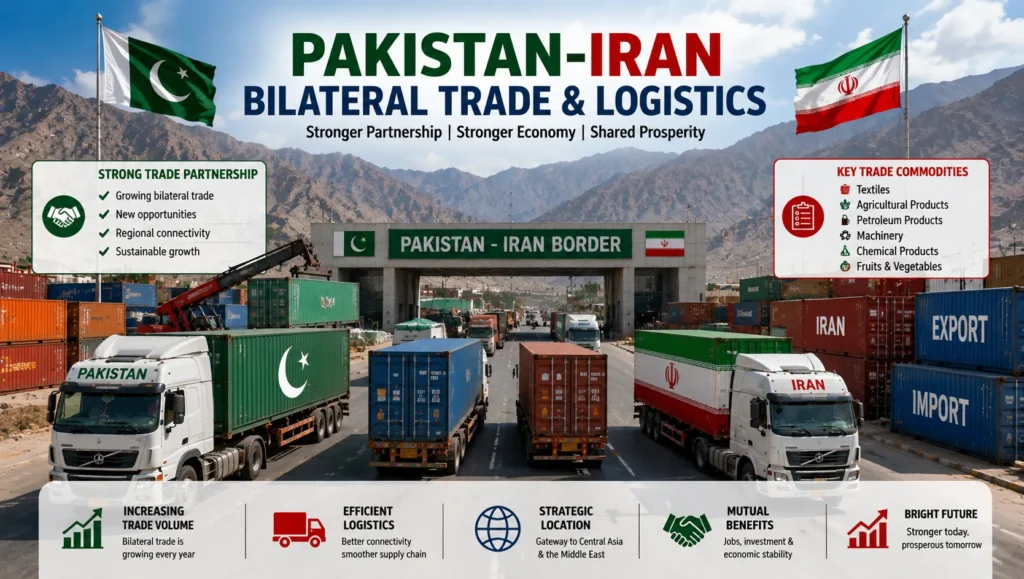
Before sanctions really bit down, Pakistan used to send Iran rice, meat, paper, textiles, fruit, and surgical goods, and bring back chemicals, plastics, oil, iron, and steel products. That basic exchange list hasn’t changed much. What’s changed is how painfully slow it’s become to actually settle payment for any of it.
If You’re Actually Thinking About Trading Across This Border
A few readers have asked how this works in practice for a small business, so here’s the realistic, step-by-step version.
Step 1: Pick a formally notified crossing point, not an informal one. Taftan is the big one. Its railway station was formally declared a land customs station in mid-2026, which means goods can now be cleared through it properly instead of relying purely on road transport and word of mouth arrangements.
Step 3: Understand the barter framework before any money moves. The State Bank of Pakistan has its own approval process for barter arrangements with Iran. Don’t assume you can just wire funds the way you would to a supplier in Dubai or China that assumption trips up most first-timers.
Step 4: Work with a customs clearing agent who’s actually handled Iran shipments before. This route has its own quirks and documentation habits. An agent who’s only ever cleared China or Gulf shipments will likely fumble it.
Step 5: Build delays into your planning by default. Even with formal notifications and signed MoUs in place, banking checks and documentation reviews still add real time. Plan your cash flow around that reality, not around the optimistic version.
Common Mistakes People Make Reading This News Pakistan-Iran Trade Talks
The biggest one I see is people assuming “trade talks” means trade is already fully open. It isn’t. Talks, MoUs, and signed agreements are the groundwork. Actual, functioning, everyday trade lanes usually take months or years to catch up to what’s announced.
Second mistake: mixing up this formal barter and border market trade with the informal cross border trade that’s existed for decades things like Iranian diesel and petrol showing up at unofficial pumps in parts of Balochistan. That informal economy is a completely separate, unregulated thing, and it’s not what these government level talks are trying to formalize.
Third mistake: expecting this to fix Pakistan’s energy situation quickly. The long discussed Iran-Pakistan gas pipeline keeps getting mentioned in these conversations because it really could help with Pakistan’s energy shortfall, but it’s been stuck for over a decade under sanctions pressure. One round of “decisive talks” isn’t going to unstick a pipeline overnight.
What This Actually Means If You’re Just a Regular Reader
If you’re not in trade or import export yourself, here’s the honest, practical takeaway. Pay more attention to the border market and banking channel news than to the summit photo-ops. The handshake photos look nice, but the real signal of progress is boring stuff customs notifications, barter mechanism approvals, border markets getting longer operating hours.My cousin’s dry fruit margins will tell you more about whether this relationship is actually improving than any joint statement will. That’s genuinely the trick I’ve been using to keep myself grounded while covering this story, and it’s a decent one for anyone who wants a reality check.
For now, the direction looks positive, more meetings, more MoUs, and a real delegation heading to Islamabad in early August 2026. Whether it turns into easy, everyday trade for people like my cousin is still an open question, and it’ll probably stay that way for a while yet.
Is Pakistan-Iran trade currently legal and open?
Yes, formal trade exists and is legal, especially through notified border crossings and the barter mechanism. It’s limited and slower than its real potential, not shut down.
What is the barter trade system between Pakistan and Iran?
It’s a mechanism that lets both countries exchange goods or settle trade through approved local currency and goods for goods arrangements, working around the banking restrictions that sanctions on Iran create.
Which border points are used for official Pakistan-Iran trade?
Taftan-Mirjaveh, Ladgasht-Jalaq, Parome-Kuhak, Mand-Pishin, and Santsar-Nobandan are the main formally designated crossing points for concessional trade.
Will the Iran-Pakistan gas pipeline come out of these talks?
It keeps coming up as a long term goal because of Pakistan’s energy needs, but it’s been stalled for years under sanctions pressure and isn’t likely to move quickly even with improving trade talks.
Is it a problem if Iranian goods show up in Balochistan markets outside official channels?
Informal cross border trade in items like fuel has existed for decades, separate from the formal system. It carries its own legal risks, so for any real business, it’s worth sticking to properly documented, formal channels instead.
Bilal Ahmad
Bilal Ahmad is the Founder and Editor of GlobalNewsHubz. He writes about technology, world news, government schemes, and digital trends. His goal is to provide readers with accurate, well-researched, and easy-to-understand information using trusted and official sources.